
Winter care and feeding suggestions for the horse
Dr. Gary Heusner, Godfrey's equine nutritionist and retired UGA equine specialist, on keeping your horses in good condition all winter: water, hay, protein and when a blanket helps.
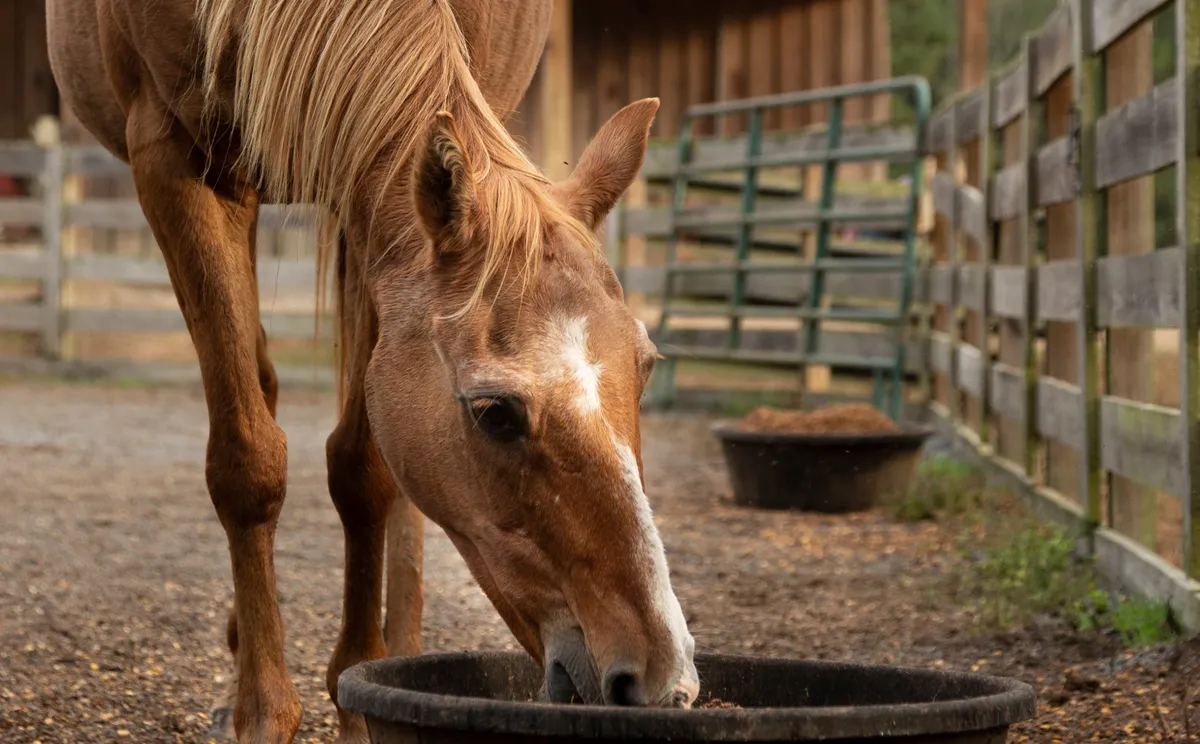
The southeastern United States is considered to be in a mild climate zone in the winter. However, to me it still gets cold, and it is not unusual to see horses shivering on a high-humidity, wet, rainy and/or windy day. Shivering occurs because of muscle action to produce heat. Horses are very adaptable to weather, much more so than humans. This we need to keep in mind so that we do not go overboard in providing winter care for the horse.
Thermoneutral zone
The thermoneutral zone is the zone where the body temperature is maintained with little or no extra energy expenditure. For example, extra calories are not needed to keep the body temperature from decreasing during cold weather or rising in hot weather. These areas of the thermoneutral zone are called the Lower Critical Temperature (LCT) and Upper Critical Temperature (UCT) respectively.
There are five climatic factors that affect a horse's thermoneutral zone. These include ambient temperature, wind velocity, global solar radiation, precipitation and relative humidity. The LCT and UCT of an individual horse are influenced by Body Condition Score (BCS), hair coat, age to a certain degree (very young and very old), and the environment the horse is accustomed to.
As mentioned earlier, horses are very adaptable to weather changes. The horse can adapt easily in 10 to 14 days. The Lower Critical Temperature in a mild climate for the average mature horse in moderate body condition (BCS 5) is considered to be around 40 degrees Fahrenheit. In cold climates, such as the northern states and mountain regions, the LCT may be as low as 5 degrees F.
Even though there are five factors influencing the thermoneutral zone, typically the climatic factor reported is wind chill. Therefore, wind chill temperature is used as a guide to determine the temperature of the current thermoneutral zone.
Feeding and nutrient considerations
Water
Water is always the most important nutrient, and especially during cold temperatures. Most horse owners and managers pay very close attention to water quality and intake during hot weather, but as a rule probably not as much during cold weather. Intake of water should be monitored in cold weather just as much as in hot weather, especially with automatic water systems.
More colic occurs in cold weather for a couple of reasons. Research has shown that horses prefer water temperature between 45 and 65 degrees F. Water tanks, even with automatic watering devices or floats, can freeze. There are currently some products on the market that will help prevent freezing that do not depend on electrical heating. Water tanks and buckets are one of the first things I check every morning when doing chores, no matter what time of the year. You may be surprised what you find, and it may not be ice.
Another reason for a higher likely incidence of colic is increased hay intake. This is especially true if the hay is of poor quality, meaning a very mature, lower-digestible hay that will remain in the gut longer to be digested by microbes and require more water to digest and move through the digestive tract. Consequently, a horse is more likely to develop impaction colic.
Another factor to help keep water intake at normal levels is salt intake. Salt should be offered free choice year-round.
Meeting possible increased caloric requirements
Many people think that meeting increased caloric needs to provide more heat to maintain body temperature is done by feeding more grain. In reality, more heat is generated by feeding more hay. Digestion of the fibrous portion is done mainly by microbes, which is a fermentation that generates heat. In turn, this heat can be used to maintain body temperature.
For every 1 degree drop below critical temperature, there is an increase of about 1% in a horse's caloric needs. Therefore, for every 10 degree drop below critical temperature, caloric needs increase by 10%. A simple rule of thumb would be to increase hay intake by 1.5 to 2 pounds per day for every 10 degrees below the lower critical temperature to meet the increased caloric needs. You could also go through the actual calorie calculations to get a more exact amount to increase hay intake.
Protein levels
Protein intake amounts should be looked at as grams or pounds required per day, not as a percent. Total protein amounts do not need to be increased. Protein intake total amounts will be increased slightly with increased hay intake. It is very important to keep protein amounts to what the individual requires.
If a horse is fed protein much higher than required, water requirements increase. I have already discussed how important it is to monitor water intake during cold weather. Blood ammonia increases with protein intake over requirements, which may cause more irritability. More urination will occur, which increases ammonia levels in stalls and can potentially lead to more respiratory problems and infections. In an enclosed barn in the winter without proper ventilation, excess protein levels may cause very high ammonia levels.
Blanketing
Most horses do not need to be blanketed unless they have summertime hair coats because they have been kept under lights for showing, or they have had their hair coats clipped. Other exceptions would be horses in poor body condition (BCS 4 or less) and possibly geriatric horses. Most horses do not need to wear blankets or turnout blankets of any type in the mild winter climates experienced in the Southeast.
As most horse owners know, as day length decreases horses grow longer hair, and as temperatures drop the hair coat gets thicker. As temperatures drop more, the hair stands on end, which is called piloerection. The hairs standing on end trap body heat as well as warm up surrounding air, and help create insulation from cold air. Piloerection sufficiently insulates healthy horses in good body condition with a normal winter coat without blanketing, provided they have access to shelter and are adapted to the climate. Adaptation comes from the steadily declining temperatures experienced beginning in fall and moving into winter.
When you blanket these types of horses, you may cause more harm than benefit. Blankets will flatten the hair coat, thus reducing the insulating effect. Also, many horses with winter coats that are blanketed on top of that coat will start sweating during the day. These horses are more likely to get sick or hurt themselves attempting to shed the blanket. If it is felt a horse needs to be blanketed, the horse should be checked routinely during the day to make sure it is not becoming hot.
Conclusion
Horses are very adaptable to weather changes. Even when drastic weather changes occur, a horse in proper condition, under a correct nutrition program, with the ability to escape from wind chill and stay dry, can adapt in two weeks or less.
How we can help
We carry horse feed, hay, salt and the supplies to keep water flowing through the cold months. Stop by or call, and we'll help you work out a winter feeding plan for your horses.